Over the past 30 years, traditional Danish food has been reinvented as New Nordic Cuisine. Chef Claus Meyer was one of the main drivers of the New Nordic wave. In 2004, Claus Meyer and some of the greatest chefs in the Nordic region decided to sit down for an 18-hour brainstorming meeting and formulated the ‘New Nordic Kitchen Manifesto’ (Denmark.dk). We can see this change occurs in a few known Danish dishes.
Smørrebrød
The revival of the region’s traditional local cuisine might be most highlighted by the return of the old Danish tradition of Smørrebrød. Smørrebrød is an open-faced sandwich with different toppings, while butter and bread are the main ingredients. The translation is “bread with butter,” but every Dane will tell you that Smørrebrød is much more than that.

Risengrød
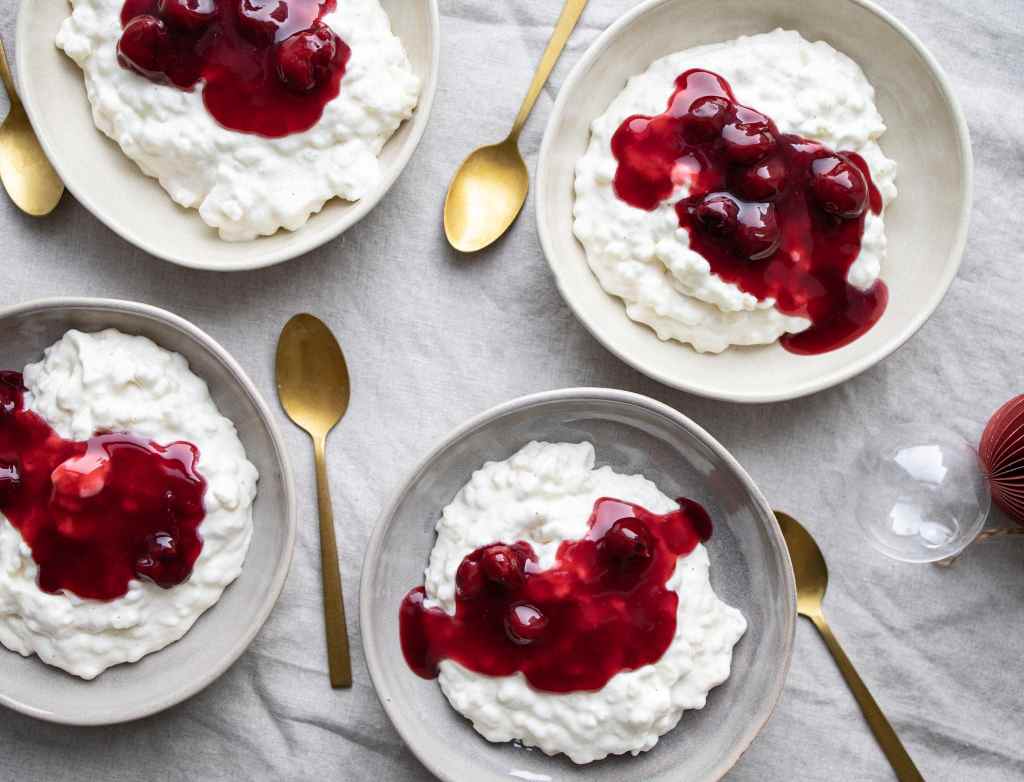
Risengrød is rice pudding or porridge. It was known for being served at Christmas until around the year 1900, when the upper class began serving Risalamande with cherry sauce for Christmas instead of rice porridge. Risalamande is made of rice pudding mixed with whipped cream, sugar, vanilla, and chopped almonds. It is served cold with either warm or cold cherry sauce (kirsebærsovs).
The known tradition, if you’ve not yet had the pleasure ,is that on Christmas Eve, the cook hides one whole almond among the slivered ones. Whoever finds it wins the ‘almond gift’.
Æbleskiver (“a-bla-ski-va”)
in addition, Æbleskiver; Danish pastry served at Christmas was originally filled with small pieces of apple or applesauce. But in the last 30 years the recepy changed and the filling disappeared and we got the æbleskive, we know today.

conclusion
So this is how the Danish cuisine revolution is affected from the Danish history.
Now I would like to hear from you…
- Did you find this blog post interesting?
- Do you have more examples for the upgraded Danish cuisine?
Let me know in the comment section bellow.
Would you like to hear more?
 what do you actually know about Denmark?
Leave a comment